When the Church Hurts: Finding God Beyond the Wounds
“For many people, the reason they stopped going to church wasn’t because they stopped believing in God. It was because someone in the church wounded them so deeply they didn’t know how to stay.”
CHURCH HURT, PEACE, HEALING, HOPE, RESTORATION,
Jane Morin
3/18/20265 min read


For many people, the deepest spiritual wounds do not come from the world—they come from the church. That sentence alone can stir emotion. The church is supposed to be a place of refuge, healing, truth, and love. It is where we gather to worship God, to grow in faith, and to find community with fellow believers. Yet for countless people, the very place meant to bring healing has become the source of profound hurt.
If that is your story, you are not alone. And more importantly, your pain does not disqualify you from God’s love or His presence. I just want you to know that when the church hurts you, God has not abandoned you.
Church hurt can take many forms. Sometimes it comes through leadership failures, manipulation, or abuse of authority. Other times it happens through gossip, judgment, exclusion, or broken relationships within a congregation. We would be foolish to consider that the Bible never speaks of such things. In fact, the Bible never pretends that God’s people are perfect. Scripture openly reveals the failures of those who were supposed to represent Him.
For instance, King David was betrayed by his own son. Moses faced rebellion from those he led. The early church dealt with division, hypocrisy, and conflict. Even Jesus Himself experienced betrayal from within His closest circle. Judas walked with Him, learned from Him, and witnessed His miracles—yet he still chose betrayal.
The painful truth is this: people in the church can fail us, sometimes deeply. But we must realize that their failure does not define God’s character.
One of the greatest dangers of church hurt is that it can cause us to confuse God with the people who misrepresented Him. This is similar to experiencing trauma by a trusted doctors hands and then calling all doctors quacks.
When someone in spiritual authority wounds us, it can distort our understanding of who God is. We may begin to believe that God is harsh, controlling, dismissive, or distant. However, scripture consistently reveals a very different picture.
Psalm 34:18 reminds us: “The Lord is close to the brokenhearted and saves those who are crushed in spirit.”
God does not minimize your pain. He draws near to it. When the church wounds you, God moves closer—not further away. If you do not sense His presence, it isn't that God decided to forsake you. Just turn around and you will find Him right there.
One of the most comforting truths in Scripture is that Jesus understands religious betrayal firsthand. Some of the harshest opposition Jesus faced came not from outsiders but from religious leaders—the very people who were meant to guide others toward God and His love.
In Matthew 23, Jesus openly rebuked leaders who burdened people with legalism while neglecting mercy and humility. His anger was not directed at wounded believers; it was directed at those who used spiritual authority to harm others.
In saying all that, I want your to know that if you have been hurt in church, Jesus is not standing against you. He is standing with you!
Healing from church hurt rarely happens overnight. The wounds are often layered with confusion, grief, anger, and sometimes even shame. Many people quietly carry questions like:
Was it my fault?
Did I misunderstand what happened?
Can I ever trust another church again?
Is there a perfect church anywhere?
These questions are normal and God is not afraid of them. In Psalm 147:3 He offers a powerful promise: “He heals the brokenhearted and binds up their wounds.”
Did you notice the imagery? God binds wounds. Healing is often gradual and intentional. It involves time, truth, and the gentle work of the Holy Spirit restoring what has been damaged.
The most important truth for anyone recovering from church hurt is this: God’s faithfulness is not dependent on human faithfulness. People may fail. Leaders may disappoint. Churches may make serious mistakes. But God remains steady and true to His word.
Hebrews 13:8 says: “Jesus Christ is the same yesterday and today and forever.”
God does not change His mind about His love towards you, or even the full price of redemption that He paid for you and those who hurt you.
Your experience with a church may have changed your perspective on faith, but it does not change who Jesus is. He is still the Good Shepherd who seeks the wounded sheep.
For many wounded believers, the path forward begins with rediscovering God apart from the painful memories tied to a church environment. That might mean returning to Scripture with fresh eyes, praying honestly about your hurt, or seeking safe and healthy spiritual community again when you are ready. Safety comes in numbers, so forsaking the believers is not the answer. I suggest you find one or two people who hear from God and are willing to pray for you, listen to you, offer wise counsel and foster an environment of healing that will restore you.
Proverbs 12:15 states,
“The way of a fool is right in his own eyes: but he that hearkeneth unto counsel is wise.”
Other times healing begins in quiet moments with God—on a porch with a Bible, on a walk, or in the stillness of prayer where no one else’s expectations are present. In those spaces, God often reminds us that our relationship with Him was never meant to be controlled by human institutions. On the contrary. For our relationship with God has always meant to be a personal relationship.
Church hurt does not have to be the end of your story with God. Some of the most compassionate, wise, and spiritually mature believers are those who have walked through deep wounds and allowed God to restore them.
Joseph was betrayed by his own brothers, yet God redeemed his story.
David experienced betrayal but still wrote psalms of trust.
Peter denied Jesus, yet he was restored and became a pillar of the early church.
God has always specialized in redemption. Your pain may feel like the closing of a chapter, but in God’s hands it can become the beginning of something deeper.
If the church has hurt you, your pain matters. God sees it. He understands it. And He cares more about your healing than about preserving anyone’s reputation. You are not weak for feeling wounded. You are human. And the same God who heals broken hearts is able to restore your faith, your trust, and your hope.
The church may have failed you—but God never will.
Selah.
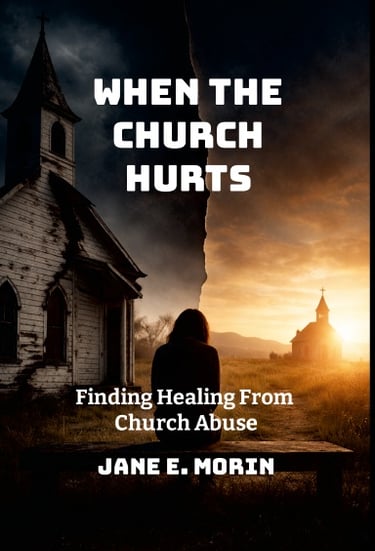
When The Church Hurts
When The Church Hurts - Finding Healing from Church Abuse is a book filled with over fifty years of Christian wisdom and answers for those who are experiencing hurt from the church or people who call themselves Christians.
Award-winning author Jane Morin, is a Bible Teacher, conference speaker, and inner healing and deliverance minister that shares key truths and applicable applications in this small book that has brought so many into a place of healing and hope. (Read More....)
Connect
Join our community for weekly encouragement.
Contact: info@selahandpsalms.com
Selah & Psalms is a ministry that encourages, equips,and informs others of the deeper truths of Gods word. It is also a ministry of Revive The Fire! If you enjoy content like this, will you consider supporting our efforts? Thank you!
© 2026. All rights reserved.
SIGN UP for our WEEKLY EMAIL that includes hope-filled reflections, bible teachings, events and more!